PSYCH MED FREE
support and safety before, during and after detox
Wherever you are on your journey to psych med freedom — considering, tapering, or rebuilding — watch this video class for truth, tips and hope! ☝️
I want more for you.
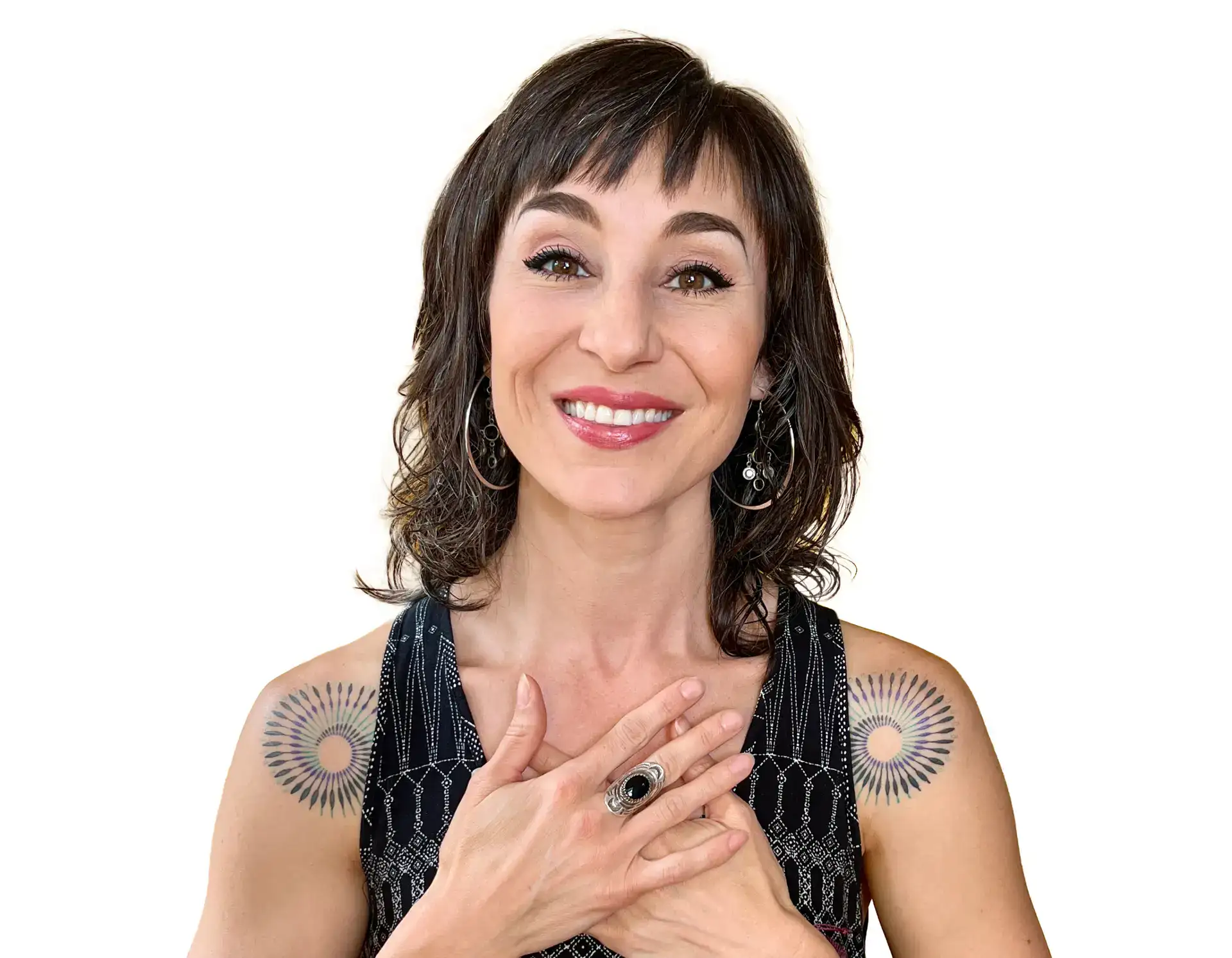
When I tapered off psych meds after 22 years, I did it too fast. Withdrawal devastated me and left me with long-term health challenges: a traumatic brain injury and autoimmune disease. That’s why I’m so passionate now about harm reduction, safe tapering, and soul support.
My detox was brutal — but it was worth it. Today I get to live 100% me: present, peaceful, and powerful. Walking through the fire taught me a lot. Along the way I gathered soul medicine and hard-won wisdom, and that’s what I’m sharing here.
May these words give you more options and support than I had. May your journey be brave and easeful. Choosing holistic mental health in a world where psych meds are sold as the “fix” is a rebel act — and you don’t have to do it alone.
Video class timestamps
0:00 • Psych drugs are not good or bad
0:20 • Chemical imbalance theory debunked
0:43 • Your brain seeks balance
1:30 • My story: medicated at 12-years-old
1:53 • Dangers, concerns and harm-reduction
3:24 • Your brain has neuroplasticity
3:52 • Slow tapering + conservative options
5:41 • Resource: Inner Compass Initiative
6:36 • Reclaiming your body and your life
7:59 • What if you actually have superpowers?
9:27 • Taper time = rebel training time
10:26 • The “drug zero” adjustment
12:12 • Stepping into a new reality
13:03 • You get to choose who you want to be!
13:35 • Pristine physical care is a must
14:14 • It’s perfect, you got this!
The disclaimer: ⚠️ I am not a doctor. Nothing here is medical advice — what I offer is life coaching based on my own personal lived experiences. This is information I never got in a doctor’s office.
I have 22 years of personal experience with psychiatric substances like antidepressants, benzos, mood stabilizers, sleeping pills, etc. You can learn more about my story – and all the drugs I tried – on the About page.
My intention with this information is to increase awareness with truth, support your safety with tips and create possibilities by sharing options. But it’s YOU who must make the sovereign, smart decisions that keep you safe. No one knows you better than you – not me, not even a doctor. Take radical responsibility for your wellbeing.
If you do decide to taper off psych drugs, you absolutely need a licensed prescriber on your care team. Working with a coach like myself for emotional support can be a great pairing. 💕🤩
QUICK LINKS
Jump ahead to the content that most interests you:
psychiatric medications are a
BAND-AID SOLUTION
Why do you experience mental suffering in the first place? Because your perfect, intelligent system is raising an alarm. Your body is always working toward homeostasis — balance. The reason you feel upset? Something is OFF and needs attention.
But the real causes of suffering are usually far too big to fix in a 30-minute medical appointment: unresolved trauma, poor coping skills, nervous system dysregulation, unhealthy habits, addiction, spiritual disconnection, or simply the stress of living in a society that treats humans like performance machines. Have you felt this kind of soul suffering? I have too. Ouch, right?
So you go looking for help… but most doctors aren’t trained to go soul diving into the subconscious with you. Instead, they prescribe psych meds. I have compassion for that — most doctors are genuinely trying to help with the tools they’ve been given.
Psych meds are consciousness-reducing substances. They do not heal the root causes of suffering.
At best, they’re a band-aid that can cover acute symptoms for a little while. Used short-term, that can be valid. Maybe they can help you survive a crisis, numb overwhelming feelings, or buy you time until you’re stable enough to do deeper work.
But underneath that band-aid the real problems keep festering. Your system alarm keeps ringing, crying for help. For some of us, it only gets louder. Until one day it breaks through. That’s when breakdowns happen — and when many people, like you and me, start searching for real healing.
Next, let’s dive into the science — what psych meds actually do in the brain, and why long-term use can be so harmful 👇
Why so many seemingly random side effects?
Your nerdy neurotransmitter lesson 🤓
We’ve got to start the “how it works” explanation here because ALL psych meds act on neurotransmitters.
Neurotransmitters = chemical messengers from your brain that tell your body how to regulate essential stay alive functions like:
- Heart rate
- Breathing
- Muscle movement
- Sleep cycles
- Appetite
- Digestion
- Mood
- Concentration
Your brain + spine = your central nervous system. That’s the master motherboard keeps you alive and balanced. To do that, 86 billion nerve cells in your body are in constant conversation. [1]
How it works
- Your system receives a trigger – either internal (I need food) or external (I see an apple) and your brain knows “something must happen!”
- POW! The brain fires off an impulse – which means it loads up a neurotransmitter with intel and blasts it off to spread the news to other nerve cells.
- The neurotransmitters travel on paths called synapse and use your spine like a freeway.
- A receptor nerve cell sucks up the neurotransmitter and gets the message: either “activate!” to get it excited or “chill out” to calm down.
- That trigger results in a reaction or sensation: “I’m hungry, I’m gonna eat that apple.”
There are at least 60 known neurotransmitters [2]. These are the top five especially impacted by psych meds:
1 Serotonin: Regulates mood, sleep, and anxiety. It’s the neurotransmitter that governs sexuality (oh la la!) = your ability to get aroused + have an orgasm. Fun fact: 90-95% of your serotonin is actually produced in your gut, not your brain. So it’s not surprising that it affects your digestion, appetite, and even bone health. [4]
2 Norepinephrine: Most famous for its impact on your alertness, stress response and mood stability. It also governs a litany of important body functions like blood pressure, blood flow to muscles, glucose levels and key organ function for your eyes, pancreas, kidneys, lymph system and intestines. [3]
3 Dopamine: The “feel-good” neurotransmitter that activates your reward system including addiction. It impacts your mood, emotions, memory, focus, stress response and sleep. Also affects your motor movements, plus digestive, heart, kidney and pancreatic function. [5]
4 GABA: A calming neurotransmitter. It decreases nerve activity, reduces anxiety, and helps regulate vision and motor control. [6]
5 Endorphins: Get-excited neurotransmitters! They make you feel euphoric, reduce stress and relieve pain. They’re the reason pleasurable activities like exercise, eating or sex boosts joy, energy, and resilience. [7]
This is why the side effects of psych meds can seem so random and widespread: they’re tinkering with your whole human operating system. Sleep, digestion, energy, emotions, sexual function, and more are affected.
It’s common for psych meds to make you feel dizzy and drowsy, give you dry mouth and a stomach ache, cause you to gain weight, make your hands shaky, make you vision blurry and stop you from having orgasms.
How psych meds actually work:
They cause the chemical imbalance
Mental health drugs, or psych meds, are technically called “Psychotropics” [8]. This label covers all prescription drugs that affect behavior, mood, thoughts or perception. They’re prescribed for a huge range of conditions like: anxiety, depression, PTSD, bipolar, ADHD, schizophrenia, autism, OCD, stress, difficulty sleeping, etc.
For decades we’ve been told these drugs “treat” a chemical imbalance in the brain – the way a diabetic gets low on insulin.
Here’s the truth: there has never been scientific proof that depression, anxiety, or any mental health struggle (apart from dementia and rare chromosomal disorders) is caused by a neurotransmitter imbalance.
That whole idea? It was born in the 1990s as a Prozac marketing campaign. Prozac claimed depression was due to “low serotonin,” and that their pill corrected it. This was one of the most successful marketing campaigns ever! Sales skyrocketed: in Prozac’s first 10 years (before a generic) it made $21 BILLION dollars [9, 10]. Pfizer jumped on board, using the same script to manufacture Zoloft. Soon the “chemical imbalance” theory became the mainstream medical narrative, accepted as truth. Studies estimate ~80% of the public still believes it’s established science [10].
But thousands of studies later, researchers admit there is still no evidence that chemical imbalance is the cause of depression — or any other psychiatric diagnosis.
👉 Here’s the irony: psych meds don’t fix a chemical imbalance – but they 100% cause one. They're not "adding" neurotransmitters to your brain. They work by altering the way your brain functions:
- Block reuptake (Antidepressants + Stimulants): Remember how we said neurotransmitters pass messages from one nerve cell to another? These drugs block that movement, so the neurotransmitters get trapped outside in the synapses, falsely elevating levels. For antidepressants (like Prozac or Zoloft) it's literally stated in the SSRI name: Selective Serotonin Reuptake Inhibitor. Stimulants (like Adderall and Ritalin) do the same with dopamine and norepinephrine.
- Amplify sedation (Anti-anxiety meds = Benzodiazepine): Benzos (like Xanax, Ativan, Klonopin) cause a change in GABA receptor shape and receptivity. GABA is the neurotransmitter that sends "stop! slow down!" messages to your system. Amplifying those messages results in system-wide shut-down. Your nervous system goes offline and you feel calmer.
- Freeze or slow signals (Mood stabilizers + Antipsychotics): Lithium and anticonvulsants (like Lamotrigine or Valproate) dampen nerve firing so there is less communication in your brain and nervous system. Antipsychotics block dopamine and serotonin receptors, muting extreme states but also preventing natural emotion.
- Alter release (Stimulants + Sleep meds): Some drugs push neurons to dump extra neurotransmitters or hold them back. Amphetamines (like Adderall or Vyvanse) flood synapses with dopamine and norepinephrine. Certain sleep meds alter multiple transmitters at once to force sedation.
- Interfere with breakdown (MAOIs): Monoamine oxidase normally clears out used neurotransmitters. MAOIs (like Nardil, Parnate, Marplan) block this cleanup crew, leaving serotonin, dopamine, and norepinephrine hanging around longer.
Let's get specific:
The 6 major classes of psych meds
Antidepressants
Examples: Prozac (fluoxetine), Zoloft (sertraline), Celexa (citalopram), Lexapro (escitalopram), Cymbalta (duloxetine), Effexor (venlafaxine), Wellbutrin (bupropion), Trazodone.
How they work: Most are reuptake inhibitors that block nerve cells from reabsorbing serotonin, norepinephrine, or dopamine. This creates the illusion of higher levels — but also freezing natural brain communication.
Good to know: Many people find antidepressants “stop working” after a while because the brain adapts. This is also why coming off too quickly can cause withdrawal symptoms like brain zaps or insomnia. A slow hyperbolic taper is key for safety.
Benzodiazepines
Anti-anxiety medication or benzos
Examples: Xanax (alprazolam), Ativan (lorazepam), Klonopin (clonazepam), Valium (diazepam), Restoril (temazepam).
How they work: Benzos boost the effect of GABA — your brain’s main “calm down” neurotransmitter. This floods your nervous system with STOP signals, slowing everything from thoughts to breathing. Their
Good to know: Even the FDA warns they should not be taken longer than 2–4 weeks due to dependence. Withdrawal can be severe (including seizures), so tapering must be extra slow and careful. Alcohol and benzos are a bad mix and can lead to overdose or dangerous blackouts.
Mood Stabilizers
Examples: Lithium, Lamictal (lamotrigine), Depakote (divalproex sodium), Tegretol (carbamazepine), Topamax (topiramate).
How they work: They dampen nerve firing and inhibit communication between cells, reducing “high highs” and “low lows.” Originally developed for seizures, they’re also used for bipolar or mania.
Good to know: Lithium has a narrow window between therapeutic and toxic dose. Long-term use can impact thyroid, kidneys, and memory — so regular blood tests are essential.
Stimulants
Examples: Adderall (mixed amphetamine salts), Vyvanse (lisdexamfetamine), Ritalin (methylphenidate), Concerta (methylphenidate ER), Focalin (dexmethylphenidate).
How they work: Stimulants block reuptake or force the release of dopamine and norepinephrine. This floods your brain with “reward” signals, boosting focus, energy, and productivity.
Good to know: Classified as Schedule II controlled substances (same category as cocaine). Withdrawal can feel like a crash — fatigue, depression, irritability — and long-term use can harm heart health.
Sleeping Pills
Examples: Ambien (zolpidem), Lunesta (eszopiclone), Sonata (zaleplon), Halcion (triazolam), Dalmane (flurazepam).
How they work: Most are sedative-hypnotics that enhance GABA or alter multiple neurotransmitters to artificially shut the system down. They don’t give “real” sleep — they sedate.
Good to know: These drugs often disrupt natural sleep cycles, which means you may wake feeling groggy. They can also trigger parasomnias (like sleepwalking or eating at night). Dependence builds quickly.
Antipsychotics
Examples: Abilify (aripiprazole), Seroquel (quetiapine), Risperdal (risperidone), Zyprexa (olanzapine), Haldol (haloperidol), Clozaril (clozapine).
How they work: Antipsychotics block dopamine and serotonin receptors to mute extreme states like mania, psychosis, or hallucinations. They can also flatten normal emotions.
Good to know: These drugs are sometimes prescribed “off-label” for sleep or mood — but side effects are serious: weight gain, diabetes risk, tremors, and even permanent movement disorders (like tardive dyskinesia = uncontrollable movements).
Convinced these substances are not the best option for mental wellbeing? Me too!
Keep reading: the taper + withdrawal guide comes next 🔻
Citations:
[9] “A Bitter Pill Prozac made Eli Lilly.” CNN article published Aug 13, 2001
from addiction to freedom
Withdrawal & tapering
Psych meds are addictive because your system is super smart
Your body is always in a divine dance working to maintain homeostasis = balance. So when you take psych meds and they create a chemical imbalance, your system adapts, adjusting neurotransmitter production accordingly. This is why:
- These medications often start out feeling potent, but after time plateau and seem like they “stop working.”
- You need higher and higher doses to get the same effect.
- Side effects can actually worsen with time, the longer your natural function is blocked.
- They’re highly addictive and stopping suddenly can be devastating – even fatal.
🚨 Danger alert: psych med withdrawal is serious business
I need to get personal here for a moment because I’m living proof of how dangerous a too-fast taper can be.
Uninformed, I tried to come off clonazepam (a benzo I’d taken daily for 18 years), Wellbutrin (an antidepressant), and Lamictal (a mood stabilizer) in just three months. Looking back, that taper should have taken years — not months.
The result? Absolute devastation. For three months I was literally bedridden. My bones hurt, I was suicidally depressed, I even lost my period 🥺 For a brief period I thought I was in the clear… until I began having mystery health collapses. Five years later I discovered the truth: that reckless taper had left me with a traumatic brain injury and autoimmune disease in my cerebellum (the part of the brain most impacted by benzos and alcohol).
I was so dizzy I could barely walk down the street, and I’d begun to lose my fine motor movements. Without answers, I could have ended up in a wheelchair with dementia. It took another full year of intense healing work — and ultimately, working with the healing root iboga — before I finally reclaimed my health and my life.
💡 Today I approach tapering with deep respect. And I want you to have all the information I didn’t. Please, don’t gamble with your wellbeing. A safe taper may take longer, but it is infinitely better than wrecking your health. Would you rather take a couple of years to come off safely, or end up with a seven-year recovery journey like mine?
I’m rooting for you to choose safety. 🖤
Three common withdrawal experiences:
The severity and duration of your withdrawal experience will greatly depend on the specific psych meds you were taking, the dose and how long you had been taking them.
1 Acute withdrawal: the shockwave. If you stop taking the psych meds abruptly or taper too fast, it’s like ripping off the band-aid and pouring salt in the wound.
For example: with antidepressants, stimulants and benzos your neurotransmitters have been stuck outside the nerve cells the entire time you’ve been taking this medication. All of a sudden that block goes away and shhhloop! the nerve cells suck up all the neurotransmitters, overstimulating your system. In the case of benzos, this can literally cause seizures.
The acute withdrawal phase usually hits in the first days and may last two weeks up to several months. Symptoms can vary wildly and may include:
- Insomnia, brain zaps, tremors
- Panic attacks, anxiety, deep depression, suicidality
- Dizziness, nausea, flu-like symptoms
- In severe cases, seizures, hospitalization or even death
This stage is temporary, but it can be dramatic and brutal. In extreme cases like mine, acute withdrawal carries risk of permanent damage like a traumatic brain injury. A slow taper greatly reduces risk and prevents harm.
2 Protracted withdrawal: the patience game. Even after the acute storm passes, healing can take months or years. This is called protracted withdrawal. Your neurotransmitter systems must adjust again and create balance.
For example: let’s say your neurons sucked up all the neurotransmitters in acute withdrawal and got overstimulated. NOW there are no neurotransmitters left hanging around and you’re not making them naturally yet. You have to wait for the brain to kick production back up, and in the meantime could suffer from legit low neurotransmitter levels. Common protracted withdrawal experiences include:
- Emotional blunting or mood swings
- Brain fog, poor concentration
- Sleep disruption
- Fatigue
- Anxiety or depression
It can feel discouraging, but here’s the truth: your brain has neuroplasticity. It wants to heal. With time, care, and consistency, most people see steady improvement and eventually feel better than ever — alive, clear, sexual, humorous, creative, and fully themselves again. Keep the faith! This is a great time to enlist support, whether from friends or family or working with a coach like me.
3 Rebound symptoms: the return of the original problem. On top of withdrawal, your old symptoms may flare back up — often worse than before.
For example, if you originally started psych meds for panic, anxiety, or depression, that situation might come roaring back. These are called rebound symptoms.
👉 The important thing to know: rebound isn’t proof you “need” the drug. It’s your system recalibrating after years of being suppressed. With time and support, these symptoms often pass.
Safe tapering: practical tips
Keep yourself safe with a slow hyperbolic taper
What is hyperbolic tapering? Most doctors (if they give tapering advice at all) suggest something like: “Just cut your dose in half every few weeks.” That’s called linear tapering — and it’s dangerous. Why? Because psych meds don’t act in a straight line. Their effects on your brain are hyperbolic — meaning the lower the dose, the stronger the effect on your nervous system.
Think of it like dimming a light:
- Turning the dial from 100% to 90% barely changes the brightness.
- But turning it from 10% to 0% makes the whole room go dark.
That’s why dropping the same percentage over and over doesn’t work. A 10mg cut at the top of your dose is a small shift, but the same 10mg cut near the bottom is HUGE for your system. This is also why so many people really struggle to get off the lowest dose of their psych meds.
💡 How it works: Hyperbolic tapering means you reduce by smaller and smaller amounts as you go down. Instead of cutting by fixed milligrams, you taper by percentages of your current dose (often 5–10%). Each reduction gets more gradual, allowing your brain time to re-balance and start making neurotransmitters naturally again. Example:
- Starting dose: 40mg
- Cut 10% = drop to 36mg
- Next cut: 10% of 36mg = 32.4mg
- Next cut: 10% of 32.4mg = 29.2mg
- At some point you will need to increase the cut percentage to actually reach zero
…and so on, with each cut getting smaller as you approach zero. Here are a few examples of hyperbolic taper plans – see the tabs for timelines ranging from four years to three months.
🧑🔬 Here’s where it gets tricky: how do you cut your dose by .2mg? It’s completely possible. You might be able to use a compounding pharmacy, create a liquid suspension, or even bead-count capsules.
The best free resource available for detailed practical how-to guidance is the Inner Compass Initiative’s Companion Guide to Psychiatric Drug Withdrawal. Put on your scientist coat and do your research deep dive.
Your body sets the timeline
Psych med taper and withdrawal requires radical responsibility. Let your body lead. These are general taper rate suggestions I can offer based on themes in the psych survivor community:
- For antidepressants, stimulants, or mood stabilizers, many people tolerate a 10% to 30% taper well
- Benzo withdrawal often requires a slower taper rate such as 2% to 5% each cut
For the first cut, go conservative and see what happens:
- If you feel unwell, HOLD. Wait until you stabilize before making any additional changes.
- If you feel fine, wait for at least a month before you taper down your dose again. It could take days to weeks for the change to “hit” and then your brain needs time to register the change plus adjust it’s neurotransmitter production accordingly.
- If it was really easy, you might consider a slightly higher cut next time.
- If it was really challenging, choose a smaller percentage for the next cut.
Taper tips
- Work with a doctor but own your process. You absolutely need a prescribing professional on your team, but remember that you are living IN your body so you know it best. If your doctor says taper down 25% and you experience side-effects... well it's completely valid (recommended, even!) to take charge and choose a smaller cut next time. Most doctors will applaud you for listening to your body, even over their advice.
- Be patient and flow with how you feel. You might be able to do a 15% cut for six months straight and then you suddenly feel unwell. Hold for a couple months. Drop the cut to 10% or 5% next time. What matters is not the timeline, it's your wellbeing. Let this be an organic process based on how you feel, not a forced plan.
- Learn and optimize! The best way to arrive to your perfect personal formula is by observing what works and what doesn't... then adjusting. You can try different cut percentages. You can try different amounts of time between cuts. You can try different taper methods! Track results in a journal. You are YOUR expert.
- Ask people with lived experience. Consider joining a community where others are going through taper and withdrawal too. Ask questions and share your own tips for reciprocal support and inspiration. I highly recommend Inner Compass Exchange.
The transition to holistic mental health management
Rebel training & coping with grace
Freedom from psych meds is a process, a time investment. You know what I believe? The time it takes you to taper is the EXACT amount of time you need to heal root causes, gather new tools and adjust your habits so that you no longer need these substances. Taper time is your rebel training time to:
- Practice pristine physical care that supports your system
- Establish daily energy work practices that rewire your brain
- Learn holistic tools to cope with triggers & emotions
- Build resilience so you're ready to do life without psych meds
BODY 💪
- SLEEP: Get 7–9 hours every night. Quality sleep improves mood, memory, and performance. Sleep is when your brain repairs itself, so it’s an absolute must during tapering. Prioritize rest!
- DIET: Eat nutritious real food and avoid ultra-processed inflammatory junk. Think leafy greens, grounding root veggies, clean protein, and fermented foods to love on your gut microbiome.
- EXERCISE: Move regularly and keep your body strong. Even a 15-minute daily walk can be a game-changer. Aim for 3–5 full activity sessions per week including strength training if you're able. Amber tip: small bursts of movement actually activate your brain more than long light movement. If I have brain fog, blasting fun music and dancing like a little loca for five minutes clears my head much better than going for walk. Try it out!
- SUPPLEMENTS: Add natural support for all your brain heavy lifting! Two of my faves: Glutathione and Resveratrol (antioxidants that support detox + neurotransmitter balance). I also love mushrooms + adaptogens like: Lion’s Mane (nerve growth) and Reishi (protection + support). There are a LOT of options when it comes to supplements so consider consulting with a pro about your personal situation and needs.
MIND 🧠
- GRIT: Discomfort will show up — symptoms, frozen feelings thawing, anger at a broken system. Legit. AND getting stuck there only harms you. Grit is the ability to persevere in the face of hardship, motivated by your passion and desire to achieve a goal. Grit is getting up OVER and OVER again. Every morning I stretch my arms overhead and recommit: “Ok, Universe. I’m all in for ALL of it, whatever I’ve got available.” That’s a grit attitude.
- DAILY PRACTICE: It’s brain training time! By doing a daily practice you literally build new neural pathways and teach your system new ways of operating. Meditation, gratitude, chanting, breathwork, yoga, martial arts… each session reinforces how to find a place of "calm." When you have a rough day, now your brain knows how to get there with ease. And when you’re completely off the psych meds? Your practice is an invaluable tool to manage your mental health holistically.
- COPING TOOLS: When you get upset (this is life, it’s gonna happen) – how do you calm down without psych meds? Now is the time to start practicing! Breath, movement and sound are top tools, and I also love EFT Tapping. When you get triggered, can you practice a pause before reacting? What about a deep breath? If you do fall back into an old habit, treat it as a learning opportunity. You DO have the power to calm yourself down holistically. With practice it gets easier and easier.
- CELEBRATE: Your small achievements are what add up to ultimate victory! Every tiny step down in dosage, every healthy choice, every symptom that passes = is proof your brain is recalibrating. Honor your progress 🎉
SOUL ✨
- LOVE: You deserve love from YOU right now. Speak to yourself with kindness and encouragement. No castigating inner dialogues. If you’re struggling, try: “Wow, self, I’m so sorry you’re struggling. You’re doing a tough project and I’ve got you.” Then adjust your day to make it more easeful. Do something sweet that you know will nourish you: buy yourself flowers, get a massage, take a phone-free break... you know what you need 😉
- CONNECTION: We humans need connection – it’s what we most yearn for! It fills up our hearts and makes us feel resourced. There are four types of connection: 🫀 Connection to self 🤝 Connection to others 🎶 Connection to nature 🌿 Connection to the divine 💕 If you choose connection as your goal and love as your tactic? I promise you can’t go wrong. Listen to your inner wisdom to cultivate more connection in your life: it might be reaching out to friends for support, it might be going to the lake or it might be sitting with your candle in prayer.
- FAITH: Belief in a higher power has been shown repeatedly to support freedom from addiction (think about the success of AA). You don’t have to believe in God. What if you trustfall into faith that your perfect system will figure this out? Can you have faith that even though this seems like a giant mess… it might turn out to be the most powerful turning point in your story? What if right now, as you are feeling your worst… you’re actually doing some of the most important work of your life?

Want personalized recommendations for your taper? Let’s talk. You can claim a FREE mini-coaching call (one per person, per lifetime). Even if you don’t choose to work with me long-term, everyone says my consultation is massively helpful + inspiring. You have nothing to lose — and everything to gain for your safety, clarity, and peace of mind.
I was desperate because I couldn't get off of psychiatric drugs – I’d been tapering for a year and was stuck. Destiny sent me Amber and in exactly six months, I was 100% off the psych drugs without any major side effects, just mild insomnia. She’s an excellent therapist because she not only covers the technical aspects of quitting psych drugs but also complements it with spirituality and shamanism. If you’re looking for someone to help you get off psych drugs, she is the perfect choice!”
– Antonio, 40, Mexico
now what?
your next chapter
This part is exciting! 🎉 Once you’re off psych meds, you get to reclaim your power, redesign your life and consciously choose who you want to be without them. Along with the foundational body, mind, soul tips above, here are five new chapter inspiration ideas:
1 Redefine yourself. For 22 years I defined myself as someone “mentally ill” who needed drugs to function. When that story disappeared, I felt lost — who was I now? Thankfully, new labels emerged: healthy, sane, yogini, mental freedom evangelist. Labels only have power if you feed them. Let yours evolve. Live in alignment with your highest self and keep growing with intention.
2 Claim your power. It breaks my heart how many deeply magical humans get labeled as “broken” and put on psych meds. What if the things that got medicated away are actually your superpowers? Sensitive? Wow! That’s a gift. Creative? Maybe genius art is waiting to be birthed from you. Remember: in ancient cultures, people who heard voices were revered as shamans. This is the time to reframe, reclaim and train those gifts.
3 Redesign your life. Let go of trying to “fit in” to an unwell society. Our modern system isn’t built for thriving. Thankfully, there are infinite ways to create a life that works with your rhythms. Personally, I do best with a flexible schedule that honors rest during my menstrual cycle and bursts of productivity when my energy is high. Design your day-to-day to match your needs, not society’s demands.
4 Purge the feelings. Psych meds freeze or alter emotion. When you unfreeze, big waves of feeling may arise. My first two years off drugs I spent a LOT of time purging unfelt emotion. This is a sacred and natural part of the process — lean in. Use breath, movement, and sound to move your energy.
- Experiment with somatic intentional catharsis practices: when you feel like you're about to explode go to a safe space for crying, screaming, or pillow punching. Sounds a little "weird" but trust me it's way better than unintentional catharsis: the meltdown, panic attack or screaming fight. I love ecstatic dance for FUN cathartic purging — nothing clears stuck emotion like a drumbeat and a good shake!
5 Consider psychedelics. Yes, I know you just got off substances — but psychedelics are the polar opposite of psych meds. Psych meds reduce consciousness; psychedelics expand it. Entheogens – plant or animal substances – that are 100% natural, holistic substances.
I have an extreme story where I did not emotionally process properly for decades. In order to catch up, do a lot of deep work in a short time, and find balance – psychedelics were massively helpful for my own process. Used occasionally and intentionally, they can help you dive into the subconscious, heal trauma, and reveal root causes.
- Iboga/ine is my top choice for brain healing: it can repair glial cells damaged by psych meds (what defines traumatic brain injury). If you are struggling with lingering symptoms, an iboga microdose protocol could help you quantum leap. Curious? Claim your free call and let’s explore your options .
Living holistic is a REBEL ACT. Taking psych meds is “normal.” But so is being disassociated and miserable. You’ve already chosen differently. Holistic healing is a rebel act. Love is a rebel act. Presence is a rebel act. The more you embody rebel YOU, the easier it becomes to thrive and find your people.
Final words of soul support
If you’ve made it this far, I’m seriously celebrating you. Just being here, learning, and seeking support is already a rebel act most people never dare. 💥
Some days this journey will feel heavy. You may wonder if you’re strong enough. YOU ARE. Withdrawal symptoms, frustration or struggle aren’t proof you’re broken — they’re proof your system is recalibrating. Healing might feel messy, but trust that your process is perfect, and it’s happening.
Happy hope! What to expect:
If you taper safely, it can greatly minimize withdrawal symptoms. With patience, you’ll get there: drug zero, 100% all you living in presence and freedom. Once your system is functioning normally again, you’ll get to reclaim natural, glorious human experiences you may not have had in years, like:
- Peak sexual performance, full arousal and ORGASMS oh la la!
- Sharp, clear mind and great memory
- Feeling awake, aware and fully present
- Normal, restorative sleep cycles
- The full spectrum of your emotions
- Total coordination and fine motor movements on-point
- Your natural metabolism, digestion, heart rate, and breath
Yes: this is worth it work. Your resilience will be rewarded!
Here’s what I want you to know: freedom is possible. Peace is possible. Joy is possible. Your spark is still inside you. You already have ALL the medicine you need within your wise soul. You can do this, brave rebel hero.
I believe in you.
YOU GOT THIS.
👏👏👏

Amber Renee
WORK WITH AMBER
I offer 1<>1 personal mental freedom coaching.
We’ll work together on the project of YOUR mental freedom. That might look like a mindset makeover, finding more joy in life, learning the energy work modality that most connects with you or helping you achieve freedom from mental health drugs.
GET ALL THE NEWS
Mental Health Rebels is growing! Join the email list and be the first to known when new content, programs and offers are released.